
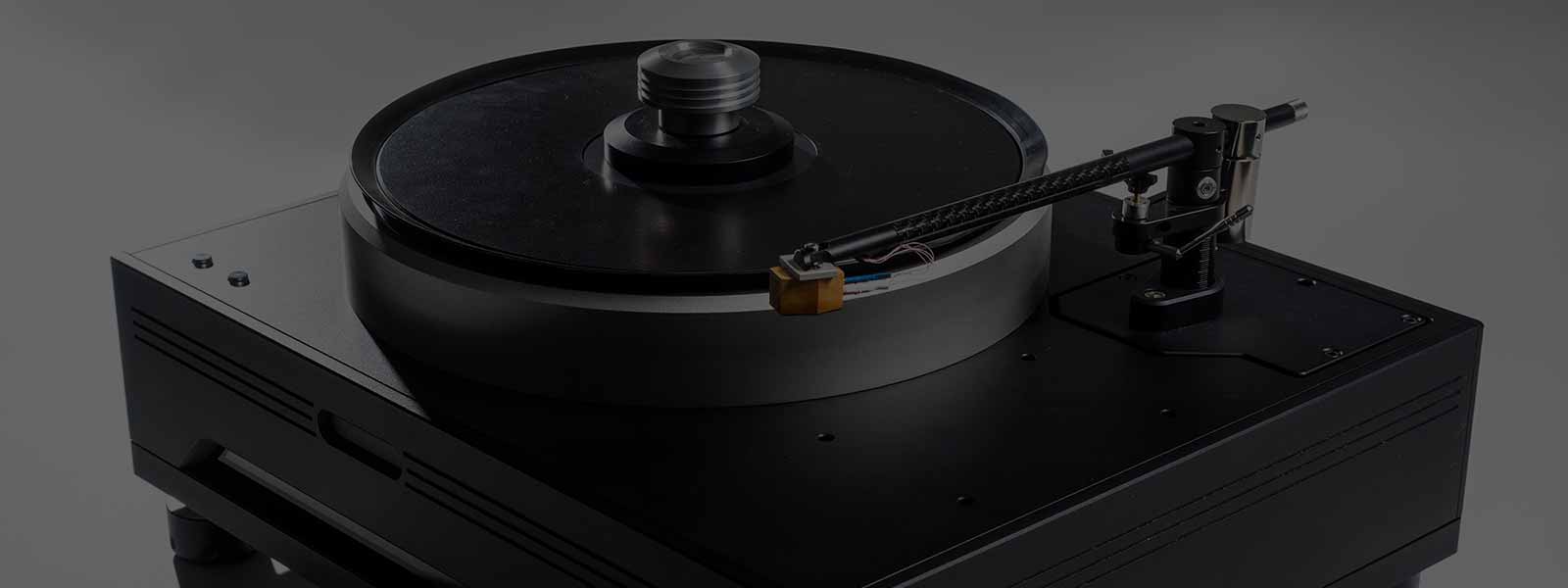
All turntables are upgradable to the current specification, protecting your investment.
When the Helix turntables were initially designed, we realised that technology was progressing at a rapid rate. What is considered state of the art today will inevitably be replaced in time as research, knowledge, experimentation and materials science progresses. We decided to design our turntables in a way so that the key performance elements were modular and replaceable when improvements were available. This means that owners of any generation of turntable have a pathway to upgrade to the current specification if they desire. For example, if an owner purchased a Helix One Mk1 generation turntable in 2015, they can upgrade it to Mk3 generation with vacuum in 2026, eliminating the need to sell an old turntable and buy a new one.
Buying a turntable of this calibre represents a significant financial investment. As we all know, a piece of high-end audio equipment that has been superseded with a new improved model can suffer from significant financial depreciation. Our philosophy is to protect the owner’s investment and allow for the possibility to improve the performance of your turntable as new technological improvements become available. Many Dohmann Audio owners comment that they appreciate this ‘turntable for life’ approach as it eliminates ‘equipment churning’, saving them a lot of money and resulting in a very high level of owner’s satisfaction. It is also a reason why Dohmann turntables rarely appear in any used equipment classifieds around the world, protecting their market value.

Unprecedented application of R&D, technology and materials science.
Audio equipment in general is a small global industry in comparison to other mainstream industries. In addition to that, the sales revenue required for a turntable manufacturer to survive is such that their products need to be affordable to the market. The demand for affordability and attractive aesthetics precludes the pursuit of high performance because as you attempt to improve a turntable’s isolation, speed & rotational accuracy, elimination of environmental and mechanical vibration, etc, the costs escalate rapidly. Therefore, only a relatively small number of brands truly attempt to create ‘ultimate level’ performance and as a result, they are low volume manufacturers with relatively small R&D budgets.
Dohmann Audio have a few unique characteristics within this small community of manufacturers.
✔ Two of the Directors also own a company that supplies high-end test equipment to test labs, research facilities, universities and the Australian Dept of Defence. By making this level of test equipment available to the Dohmann Audio team, they have created a test lab that is rare in its capability and scope. As a result, Dohmann Audio is capable of resonance mapping, measuring and data collection that is unprecedented for an analog audio manufacturer.
✔ One of Mark Dohmann’s interesting characteristics as a designer of analog audio systems is his willingness to look outside the realms of the audio industry for technical solutions. To improve a turntable’s performance, you can identify the key areas that present technical challenges. You can also measure accurately and collect data (refer above). Part of our design process is to ask questions like “How do people who have this technical challenge in other industries deal with it? What technical solutions have been developed in aerospace, ballistics, electron microscopy, nanotechnology, quantum computing, neuroscience and medical research to address these challenges? Can we learn from what other industries with significant R&D budgets are doing? Can we apply and re-design some of these technologies to suit an analog audio ecosystem? Dohmann Audio has a great track record of innovation and applying new technical approaches to turntable design.
✔ Mark’s background in aviation engineering exposed him to a remarkable group of materials science engineers and mentors, instilling a deep interest and knowledge in materials research in Mark. Today, Dohmann Audio works with an extensive team of materials scientists around the world and the Helix turntables incorporate materials that are simply not found in any other turntable brand. In particular, the resonance suppression architecture technology contains many unique material elements.

Focus on resonance mitigation and isolation.
As the stylus of a cartridge moves through the groove of a vinyl record, the vibrations created by the groove are converted to electrical signals through a coil in a magnetic field. The electric signals are carried along wires to the amplifier which enhances the power of the signal. Since vibrations are converted into a signal which eventually is converted into sound, we can see that any extra vibrations that are picked up by the stylus influence the purity of the signal and hence the sound quality.
In a mechanical system such as a turntable, energy in the form of vibration over a large range of frequencies is present. Some vibrations originate from the external environment and are transmitted through the building structure and through floor into the playback system. Other vibrations are caused by people moving near the system or by bass transmitted through the floor. Some vibrations are transmitted through the air and some vibrations originate from the mechanical system itself like the motor, the bearing or the actual stylus interacting with the record. Vibrations interact with each other, resulting in all sorts of complex vibration patterns within the playback system. Ultimately these unwanted vibrations mix with the vibration of the stylus in the groove, causing distortion and unwanted sonic artifacts.
Therefore, the Holy Grail of analogue audio design is to eliminate as much of the unwanted vibration (resonance) as possible so that the stylus can interact with the groove and ONLY with the groove, thus picking up all the musical information without interference or influence by any other phenomena. It is actually impossible to completely eliminate all unwanted vibration, but the more successful you are in reducing it, the better the sound quality achieved. All turntable designs attempt to deal with these resonances to some degree.
What makes Dohmann Audio unique is the extreme effort we go to ensure that these unwanted vibrations are kept away from the signal path.
For example, to isolate the Helix One and Helix Two turntables from ground transmitted vibration, instead of using common suspension systems based on springs, rubber, plastic, foam, air or spikes which have serious limitations, Dohmann Audio use a revolutionary Negative Stiffness Mechanism (NSM) from MinusK Technology USA who developed this isolation technology for electron and atomic force microscopy and other applications that are very sensitive to resonance. This significantly mitigates low frequency vibrations up to approx. 100Hz.
If we simply place a turntable on a MinusK platform (as many people do), it helps to reduce low frequency vibration but frequencies above 100Hz get transmitted through the platform to the turntable. The turntable’s own built-in isolation system then needs to be specifically tuned to deal with these higher frequencies. Most turntables are not designed to specifically sit on an isolation platform and work completely in harmony. One example is the rotating platter mass at 33rpm will have a natural frequency of 0.55hz. So the turntable itself will generate its own “seismic” vibrations. This is a major source of noise being created by the very system a designer is trying to isolate from the external world.

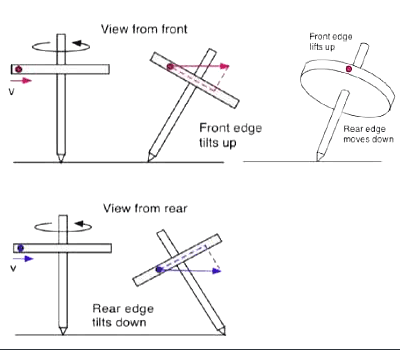
Then add the greater issue of tall heavy platter systems sitting high on a 6 degree of freedom (x,y and z axis) compliant low frequency isolation system like the MinusK and you will see this causes precessional instability due to the high centre of mass of the platter behaving like a spinning top children’s toy toppling about. This is why just adding a MinusK to your existing turntable is not the same as the Helix architecture.
The Helix 1 and 2 cleverly distribute the table mass around and below the MinusK internal mechanism to lower the center of mass and deliver unparalleled stability in the platter precessional modes via a low-slung greater mass than the platter mass. This is one reason why the Helix is “not just a platter stuck on a MinusK”. The spinning platter mass is being stabilised in a greater chassis mass distributed low and evenly.
Solid mounted turntables do not isolate well. They try to use mass to absorb vibrations. Some demonstrations might show vertical stability based on the floor and bench mounting being solid in the vertical plane but on flexible wooden floors these designs suffer. Horizontal vibrations are also present in the environment (just ask anyone living in tall buildings or in cities affected by the tectonic forces that cause earthquakes and tremors). This problem also affects laboratory instruments such as electron and atomic force microscopes which like a phonograph cartridge are very susceptible to vibration intermodulation distortion.
In addition, the higher frequencies often interact with the turntable’s own isolation system which causes further problems. To avoid this, Dohmann Audio worked with MinusK to create a special version of the platform that is tightly integrated into the turntable chassis to create a seamless transition from low to high frequencies. The isolation system is a part of the entire mechanical structure so there is no unplanned interaction between two disparate systems.
The critical question then becomes, what about the frequencies above 100Hz?
Here’s where the Dohmann technologies come into their own. The Helix turntables have a mechanical crossover system which creates a smooth continuous pathway to channel vibrations of higher frequencies away from critical areas on the turntable. The proprietary TDS technology uses a pre-stress accumulation release (PAR) strategy to isolate and dissipate vibrations inside the chassis.
Furthermore, the motor, bearing and armboard are on separate plates that are significantly isolated from each other, making it extremely difficult for energy to transfer between these critical areas. A unique arm board damping technology is used which further dissipates energy and is a major contributor to the sound quality.
We call this entire wholistic approach our Micro Signal Architecture© (MSA). MSA is a cohesive design approach that uses the most advanced available techniques to remove physical and mechanical vibration and electrical noise.
So well beyond simply integrating a MinusK isolation platform into a chassis, Dohmann Helix One and Two turntables incorporate the latest resonance mitigation technologies available to ensure that the stylus of your cartridge has the greatest chance of extracting the vital information from a vinyl record without suffering the effects of unwanted resonance. These technologies have never been applied so comprehensively to audio playback systems before and are not available any other commercially available brand of turntable.
Is it worth all this cost and effort? If you are searching for the most direct connection to the emotional message of the music, if you are looking to experience the purest enjoyment of your analogue music system… we think so!

Armboard technology
Our research revealed that the armboard is an important location for resonance mitigation and this is often neglected in turntable design. Our Mk2 & Mk3 generation turntables incorporated armboards manufactured with a sandwich construction, containing materials used in ballistics industry which dissipate energy with a unique dispersion pattern, removing this energy from the signal path. Our armboards are floating and completely mechanically decoupled from structural elements that are addressing other resonance energies.

The sound!
All of this effort and expense that has gone into the research, materials and evidence-based science of our designs would be to no avail if it did not improve the transparency and performance of the sound quality. In our experience, there are moments where we apply a new technology and the sound is not improved, in which case that technology is not serving the music. To this end, we spend a lot of time listening to music and finding correlations between different technological inputs and the resulting effect on the emotional expression within the musical performance.
We have assembled a trusted group of experienced, passionate music enthusiasts who join us in listening to proposed new technical innovations, and boy are they difficult to impress! Nevertheless, getting approval from the trusted ears of our listening panel is vital in our process and provides that vital human feedback loop that ensures that the art is being progressed for the sake of musical enjoyment.
